

Primary Colors of Light into White
Easy
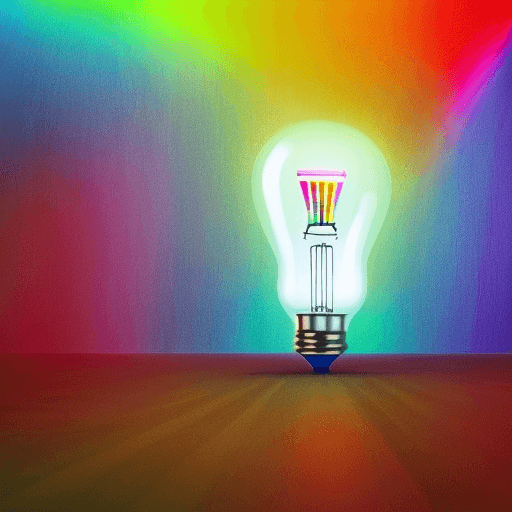
What happens when you shine three colored lights at the same spot? Unlike paint, mixing all primary colors of light does not make a dark muddy color. It makes white light.
You cover three flashlights with colored plastic sheets. One gets red. One gets green. One gets blue. First aim two flashlights together onto a white surface. Notice the new color where the beams overlap. Then add the third flashlight to the same spot.
When all three beams overlap the spot turns white. Primary colors of light work differently from primary colors of paint. Combining light adds brightness instead of absorbing it.
Hypothesis
The hypothesis is that when red, green and blue light are mixed together, they will form white light.
Science Concepts Learned
Color Mixing of Light
Cover three flashlights with colored plastic sheets — one red, one green, one blue. Aim two of them at the same spot on a white surface and notice the new color where the beams overlap. Then add the third. When all three beams hit the same spot, it turns white. That's different from mixing paint, where adding colors makes things darker. Combining red, green, and blue light adds brightness instead of absorbing it.
Method & Materials
You will use three flashlights and a square of blue, red and green plastic. You will attach a different colored circle of plastic sheet to each flashlight and beam light from two flashlights together to see what color is created. Then beam light from all the flashlights together into one spot.
You will need three flashlights or three slide projectors and red, green and blue plastic sheets.
MEL Physics — hands-on physics experiment kits delivered monthly — real experiments, not just reading. (Affiliate link)
See what’s includedResults
The results of the experiment showed that when red, green and blue light are mixed together, they form white light. This observation stands out because it shows that the primary colors of light are different than the primary colors of pigments.
Why do this project?
This science project is interesting and unique because it teaches students the concept of primary colors of light.
Also Consider
Experiment variations to consider include using different colored plastic sheets or using different colored light bulbs instead of flashlights.
Full project details
Additional information and source material for this project are available below.Related videos
These videos explain the science behind this project and demonstrate key concepts used in the experiment.
Share this Science Project:
Related Science Fair Project Ideas
Squeeze a simple mix of cornstarch and water into a solid ball, then open your hand and watch it flow back into a liquid.
Easy

Punch a bowl of cornstarch and water and discover a liquid that turns solid under force, then flows the moment you stop.
Easy

Connect cups of colored water with paper towels and watch capillary action build a complete rainbow overnight.
Easy
Share this Science Project: