

Mealworms and Surface Texture
Medium
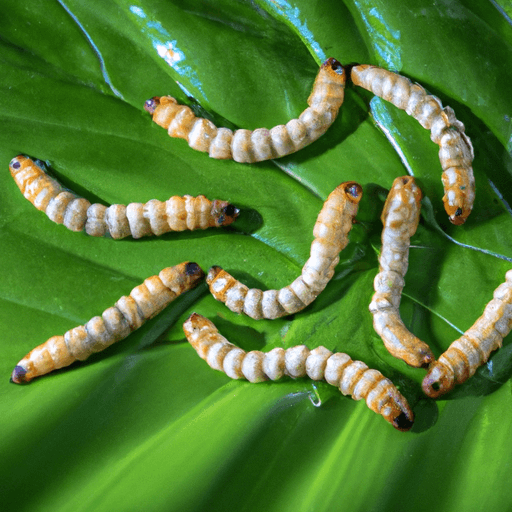
Do mealworms travel farther on smooth surfaces or rough ones? You test several different materials:
- sandpaper
- cloth
- paper
- wood
- aluminum foil
Place a mealworm in the center of each surface and time it for two minutes. Each time it changes direction mark a dot. After two minutes connect the dots and measure the total distance. Test ten mealworms on each surface and calculate the average.
Comparing the averages shows which textures help mealworms move the farthest. The results also hint at how a mealworm's body grips certain surfaces.
Hypothesis
The hypothesis is that mealworms will move differently on different surfaces.
Science Concepts Learned
Animal Locomotion
The surface under a mealworm's body changes how far it travels. You test several materials — sandpaper, cloth, paper, wood, and aluminum foil — by placing a mealworm in the center of each and timing it for two minutes. Each time it changes direction, mark a dot; after two minutes, connect the dots and measure the total distance. Test ten mealworms on each surface, then calculate the average. Comparing the averages shows which textures help mealworms move the farthest and hints at how a mealworm's body grips certain surfaces.
Method & Materials
You will test each mealworm on each surface for two minutes, mark the center of the test material with a small "x", place one mealworm on the mark and start timing, and record the total distance the mealworm traveled.
You will need 12 inch by 14 inch pieces of different textured surface materials, 10-12 mealworms per student group, different colored nail polishes, a clock or watch with a second hand, and permanent markers.
Tinker Crate — science & engineering build kits for ages 9–12 — real tools, real experiments, delivered monthly. (Affiliate link)
See what’s includedResults
The results showed that different surfaces affect the distance mealworms travel in two minutes. The texture of the surface had an impact on the distance the mealworms traveled, with some surfaces allowing the mealworms to travel farther than others.
Why do this project?
This science project is interesting and unique because it allows students to observe the movement of mealworms on different surfaces and measure the distance they travel.
Also Consider
Experiment variations to consider include testing the mealworms on different surfaces with different temperatures and testing the mealworms on different surfaces with different levels of humidity.
Full project details
Additional information and source material for this project are available below.Related video
These videos explain the science behind this project and demonstrate key concepts used in the experiment.
Get ready for an exciting experiment where we test what earthworms like best - light or dark, wet or dry, and sound or quiet! Check out this cool video to see what conditions these wriggly creatures prefer.
Share this Science Project:
Related Science Fair Project Ideas

Match bird beaks to hardware store tools and use the tool's purpose to predict what each bird eats.
Medium

Show a betta fish its own reflection again and again to discover how quickly it stops flaring at the mirror.
Medium

Pick any biome, find two species on different continents, and discover how the same environment can sculpt unrelated animals into near look-alikes.
Medium
Share this Science Project: