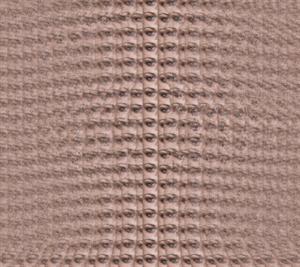
Do near-sighted and far-sighted people see the same shape in a Magic Eye stereogram? You show 30 participants a Magic Eye image that contains a 3D soda can. Ten have normal vision. Ten are near-sighted. Ten are far-sighted.
Each person gets three minutes to identify the hidden shape. Normal and near-sighted participants see the can as convex (popping outward). Far-sighted participants see the same can as concave (pushed inward).
Hypothesis
The hypothesis is that persons with different eyesight conditions will perceive the image in the magic eye pattern differently.
Your brain does not just interpret flat images — it also constructs depth from visual patterns, and different eyes build different versions. When 30 participants view a Magic Eye stereogram containing a 3D soda can, normal and near-sighted participants see the can as convex, popping outward. Far-sighted participants look at the same image and see the can as concave, pushed inward. The brain adds depth information on its own, and the result changes depending on the viewer's eyesight condition.
Your brain combines the slightly different views from each eye to perceive depth — but eyesight conditions alter how that merging works. When 30 participants view a Magic Eye stereogram containing a hidden 3D soda can, the results split along vision type. Normal and near-sighted participants see the can as convex, popping outward. Far-sighted participants look at the same image and see the can as concave, pushed inward. That difference shows how persons with different eyesight conditions perceive depth information differently, even from identical images.
Method & Materials
You will test 10 participants with normal vision, 10 participants with near-sighted vision, and 10 participants with far-sighted vision. You will provide them with explanations and training on how to view a Magic Eye image, and then ask them to look at a Magic Eye stereogram with a 3-D image of a soda can inside.
You will need a Magic Eye stereogram with a 3-D image of a soda can, a Magic Eye stereogram book, a standard color dot test, and 30 participants with different eyesight conditions.
Eureka Crate — engineering & invention kits for ages 12+ — monthly projects that build real-world skills. (Affiliate link)
The results showed that the participants with normal and near-sighted vision saw the soda can in the Magic Eye image as appearing to be convex in shape. The participants with far-sighted vision saw the same soda can in the Magic Eye image appear to be concave in shape. This proves that persons with different eyesight conditions will perceive the image in the Magic Eye pattern differently.
Why do this project?
This science project is interesting because it explores how different eyesight conditions affect the way people view Magic Eye images. It also demonstrates how optical illusions can be used for fun or for learning science.
Also Consider
To improve the reliability and accuracy of the results, a larger sample of participants should be used. This science project can also be repeated by comparing different age and gender of the participants.
Full project details
Additional information and source material for this project are available below.